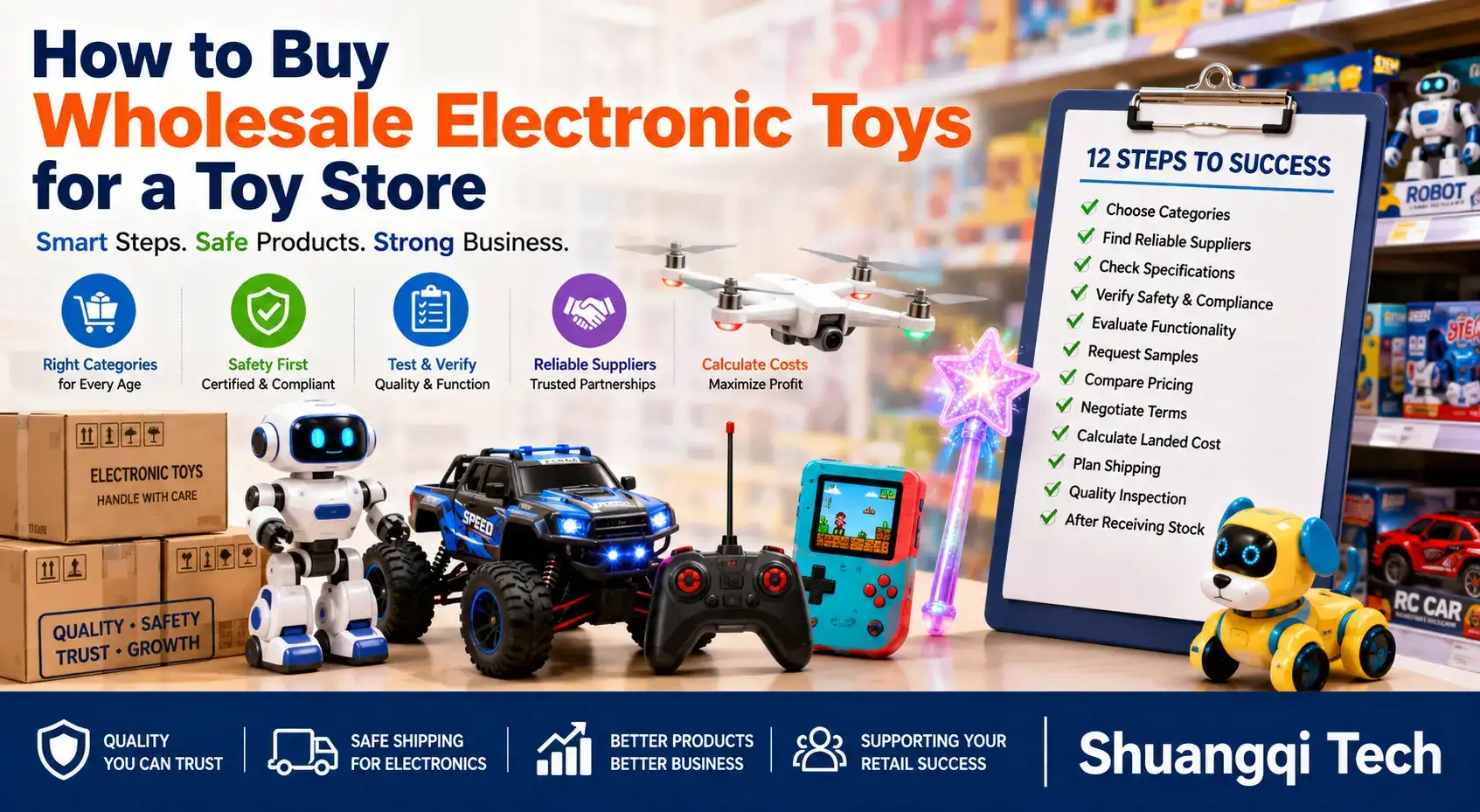
How to Buy Wholesale Electronic Toys for a Toy Store
Running a toy store is an exciting business. Many kids and parents now look for toys that have lights, sounds, or movement. To keep your shop full of these items, you need to know how to pick the right products. Buying in bulk is different from buying a single gift. You have to think about battery life, safety rules, and how much it costs to ship heavy boxes. When you find a trusted electronic toy supplier, you can get a lot of variety for your customers. This guide helps you understand the steps to stock your shelves with high-quality items that work perfectly.
Electronic toys are popular because they are interactive. They help children learn or just give them a lot of fun with remote controls and bright LEDs. However, electronics can be tricky. You have to make sure the wires are safe and the batteries do not leak. If you buy from the wrong place, you might end up with toys that break quickly. That is why it is important to check facts and look for real manufacturers. In this article, we will look at how to choose categories, check technical details, and manage shipping so your toy store stays successful and your customers stay happy.
1. Define Electronic Toy Categories
Before you buy, you must know what kind of toys you want. Electronic toys come in many groups. Each group has different parts and attracts different age ranges.
- Battery-Operated Toys: These are very common. They include toy cars that drive on their own, robots that walk, and small drones. These toys usually need simple AA or AAA batteries. They are great for younger kids who like movement.
- Educational Electronic Toys: These are often called STEM kits. They teach kids about science, technology, engineering, and math. Some might even teach basic coding. Parents love these because they help children learn while playing.
- Gaming & Interactive Toys: This group has handheld game consoles or "smart toys" that talk back to the child. Some use sensors to feel touch or hear voices.
- LED and Sound-Based Toys: These are simpler but very popular for parties or toddlers. They include wands that light up or musical instruments that play songs when buttons are pressed.
Knowing these categories helps you talk to a wholesale electronic toy provider more clearly. You can ask for specific catalogs instead of looking at thousands of random items.
2. Choose Reliable Electronic Toy Suppliers
Finding the right person to buy from is the most important step. You want someone who is honest and has good products.
- B2B Platforms: Websites like Alibaba or Global Sources are huge. You can find many sellers there. Look for "Gold Suppliers" or those with high ratings. This shows they have been in business for a while.
- Specialized Manufacturers: Some factories only make electronic toys. They understand the circuit boards and sensors better than a general toy factory. It is often better to go to the source.
- Authorized Distributors: If you want famous brands, you must go through authorized distributors. They give you the right to sell those brands in your store and ensure the items are not fakes.
3. Check Technical Specifications
Since these toys have wires and chips, you must look at the technical side. Do not just look at the colors.
- Battery Type: Find out if the toy uses regular batteries or a built-in lithium battery. Lithium batteries are usually rechargeable and better for expensive toys, but they have special rules for shipping.
- Charging Method: If a toy is rechargeable, check if it uses a USB cable or a wall plug. USB is very popular now because kids can charge toys using a computer or a phone brick.
- Material Quality: The plastic should be strong. Electronics can get warm, so the material must be heat resistant. It should not melt or smell bad when the toy is on for a long time.
- Component Reliability: The buttons should feel solid. If a button gets stuck after ten clicks, the toy is not good for a store.
4. Verify Safety and Compliance
Safety is the biggest concern for toys. Electronics add extra risks like short circuits.
|
Certification
|
What it Means
|
|
CE
|
Shows the toy meets health and safety rules for Europe.
|
|
FCC
|
Important for toys with radio waves (like RC cars) in the US.
|
|
RoHS
|
Confirms the toy has no dangerous chemicals like lead in the electronics.
|
You must also check if the toys follow the Consumer Product Safety Commission rules. This includes making sure the battery compartment has a screw so kids cannot swallow small batteries. Always ask the supplier for their test reports before you pay.
5. Evaluate Product Functionality
You should know exactly how the toy works. If you do not understand the toy, you cannot sell it.
- Test the Sensors: If a toy is supposed to move when you clap, test it many times. It should work every time.
- Check Remote Range: For remote control cars or drones, see how far the signal goes. A car that stops moving after two meters will make a child sad.
- Battery Life: See how long the toy lasts on one charge. If it dies in five minutes, it is not a good product.
- App Compatibility: If the toy uses a smartphone app, make sure the app is easy to download and does not crash.
6. Request Samples for Testing
Never buy 1,000 toys without seeing one first. Ask for a sample. When it arrives, do not just look at it.
- Real Usage: Give it to a child or play with it yourself for an hour. See if it gets too hot.
- Continuous Operation: Leave the toy running for a long time. This helps you see if the motor or the lights fail after a few hours of use.
- Check for Defects: Look at the wires inside if you can. Everything should be neat and tidy.
7. Compare Pricing for Electronic Goods
Price is not just the number on the tag. You have to look at what you get for that money.
- Unit Cost vs. Features: A toy car for $5 might be okay, but a car with lights and sounds for $6 might sell much faster.
- Batteries Included: Check if the batteries come in the box. If they do not, you have to tell your customers, or buy batteries separately to sell to them.
- Spare Parts: Since electronics can break, ask if the supplier sells extra tires, propellers, or remotes.
8. Negotiate Electronic-Specific Terms
When you talk to a supplier, discuss the details of the deal.
- Minimum Order Quantity (MOQ): Some suppliers want you to buy 500 pieces. If you are a small store, try to negotiate a lower number for your first order.
- Warranty Support: This is huge. If 10% of your toys do not turn on, the supplier should give you your money back or send new ones.
- Replacement Policy: Make sure you have a written agreement on how to handle broken electronics.
9. Calculate Landed Cost
The "landed cost" is the total price it takes to get the toy to your door.
- Product Cost: The price you pay the factory.
- Shipping: Electronics with batteries can be expensive to ship because they are considered "dangerous goods" by airlines.
- Import Duties: Your government might charge a tax on electronic imports.
- Packaging: Electronic toys need extra bubble wrap or strong boxes so the internal parts do not shake and break.
10. Plan Shipping for Electronics
Shipping electronics is different from shipping clothes.
- Battery Restrictions: You cannot always send lithium batteries by air. They might have to go by sea, which takes longer.
- Protective Packaging: Use anti-static bags or thick foam. One big drop can break a circuit board inside a toy car.
- Expert Freight Forwarders: Use a shipping company that knows how to handle electronics. They will know the paperwork needed for batteries.
11. Quality Inspection Before Shipment
Before the ship leaves the port, have someone check the goods. You can hire an inspection company. They will pick random boxes and test the toys. They check the wiring and make sure the battery compartments are safe. This prevents you from receiving a container full of broken toys.
12. After Receiving Stock
Once the toys arrive at your store, your job is not over.
- Re-Test a Batch: Open a few boxes and make sure nothing broke during the long journey.
- Keep Accessories: Have extra batteries or small screwdrivers in your store. This helps customers who need help right away.
- Support Your Customers: Be ready to explain how to sync a remote or how to charge the toy. Good service keeps people coming back.
Conclusion
Buying toys for your shop is a journey that starts with choosing the right categories and ends with providing great support to your customers. You have to be careful with technical details like battery types and safety certificates. Finding a partner who acts as a reliable source for your inventory is the key to growth. When you check your samples and understand your costs, you can price your items fairly and make a good profit. Remember to always focus on quality because a toy that works well is a toy that makes a child smile. By following these steps, you will build a strong reputation for your store.
Your Electronic Toy Partner in Business
Choosing the right stock is just the beginning of building a successful retail brand. At Shuangqi Tech, we understand that quality and trust are the most important parts of any business relationship. Whether you are looking for specific items or need advice on how to grow your inventory, we are here to help you find the best solutions for your shop.
We focus on providing products that meet high standards so you can sell with confidence. Our team is dedicated to helping store owners like you succeed by offering reliable service and clear communication. Contact us today to learn more about how we can support your business goals and help you bring the best products to your local market.