






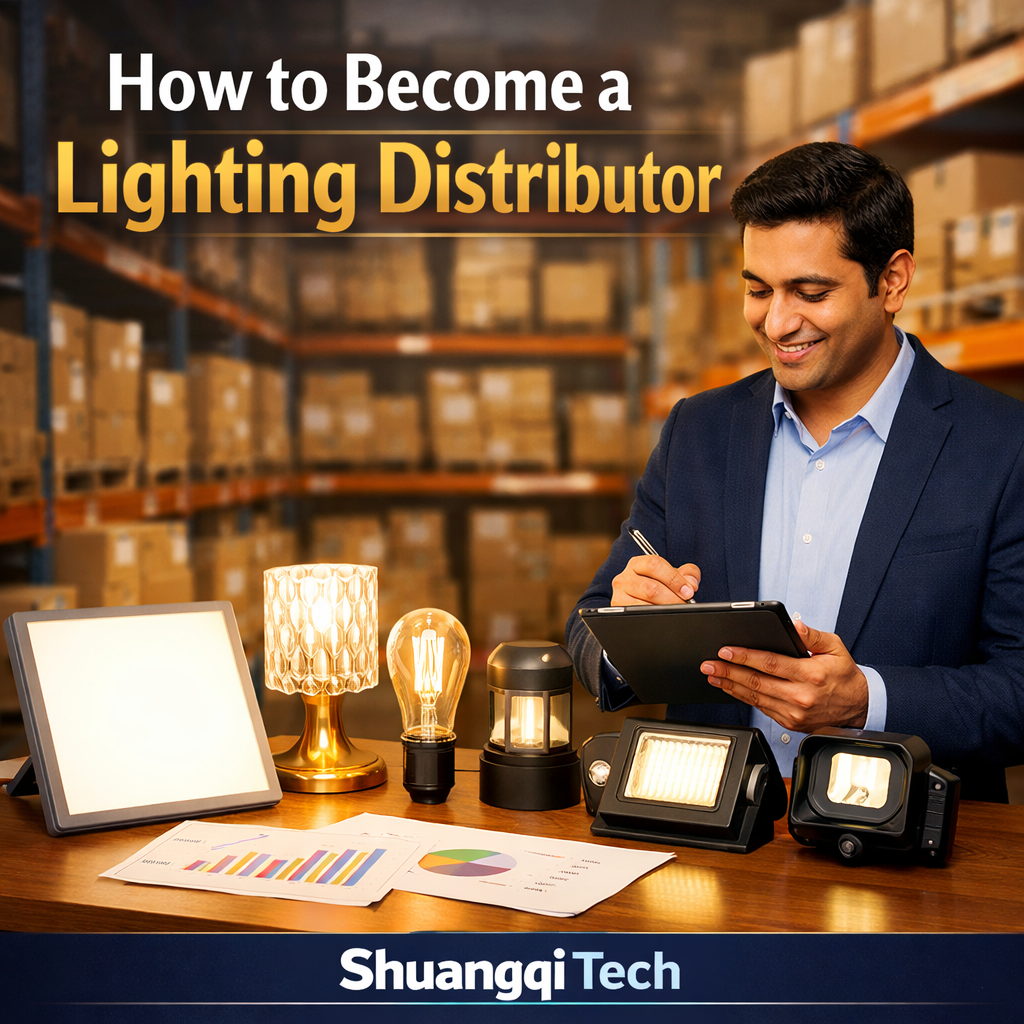
Becoming a lighting distributor or dealer involves more than just buying and selling products. Both roles act as a critical link between manufacturers and retailers, contractors, or end-users, though the terms are often used interchangeably depending on the region and the scale of the business. In the lighting industry, distributors and dealers handle a wide range of products, from commercial LED panels to decorative home lighting and outdoor fixtures built to withstand rain, dust, and temperature swings.
Distributors and dealers are responsible for sourcing products, managing inventory, ensuring compliance with safety standards, and providing timely delivery to clients. Unlike retailers selling single units to end consumers, distributors and dealers focus on bulk sales and B2B relationships, which makes their role crucial for manufacturers who want to expand market reach.
Key opportunities in the lighting distribution and dealer business include supplying to commercial projects, partnering with interior designers, offering specialty lighting solutions, becoming an outdoor lighting dealer for landscape and security fixtures, and exploring emerging markets like smart lighting and energy-efficient products.
Before starting, it's essential to understand the market landscape. Conducting thorough market research helps identify high-demand product categories and the target audience. For example, LED commercial lighting might be in high demand in urban infrastructure projects, while decorative smart lights may appeal to residential designers.
Choose a niche based on:
Whether positioning the business as a distributor or a dealer, and whether focusing on indoor, commercial, or outdoor lighting, this niche decision shapes every supplier and inventory choice that follows. Tools such as industry reports, trade shows, online forums, and B2B marketplaces can help gather insights. Creating buyer personas for retailers or contractors ensures your strategy aligns with client needs.
Once the market research is done, set up your business infrastructure. Key steps include:
A solid foundation in logistics, accounting, and compliance is essential to handle bulk orders efficiently.
A distributor or dealer's success depends heavily on suppliers. Reliable lighting suppliers ensure quality products, consistent availability, and competitive pricing.
Building long-term relationships with trusted suppliers can also give you access to exclusive deals or early releases of new products.
Outdoor lighting carries its own set of requirements that a general indoor lighting dealer does not need to worry about. Products in this category, such as outdoor LED fixtures, solar garden lights, and weatherproof commercial lighting, need an IP rating that reflects real exposure to rain, dust, and temperature changes, not just a general weatherproof claim on the packaging. A dealer entering this space should confirm the specific IP rating for each product line and understand which rating suits which application, since a light rated for occasional rain exposure is not the same as one built for full submersion or constant outdoor use.
Demand for outdoor lighting also follows a different pattern than indoor lighting, often tied to seasonal construction projects, landscaping contracts, and municipal or commercial infrastructure upgrades. A dealer who understands these cycles can time inventory and supplier negotiations around peak demand periods rather than carrying excess stock through slower months. Building relationships with landscapers, contractors, and property management companies tends to generate more consistent order volume for an outdoor lighting dealer than relying on general retail foot traffic alone.
Efficient inventory management ensures products are always available for clients without overstocking.
Proper logistics not only reduces costs but also enhances customer satisfaction by ensuring timely deliveries.
A strong sales strategy is crucial to attract B2B clients.
Combining online visibility with offline networking often yields the best results for lighting distributors and dealers alike.
Understanding costs and profit margins is essential to sustain a lighting distribution business.
Accurate financial planning allows you to scale the business without facing liquidity issues.
Distributors and dealers must ensure products meet industry standards and client expectations:
Adhering to compliance rules protects both the business and the end-user while enhancing reputation.
Once established, distributors and dealers can expand to grow revenue:
Strategic partnerships with manufacturers can also help secure exclusive deals, giving your business a competitive edge.
Lighting distribution and dealer work comes with challenges:
Addressing challenges proactively ensures sustainable growth.
Becoming a lighting distributor or dealer, whether in general commercial lighting or specializing as an outdoor lighting dealer, requires a combination of market knowledge, reliable suppliers, strong operational management, and effective sales strategies. By focusing on quality products, B2B relationships, and compliance, you can establish a profitable and sustainable lighting distribution business. Continuous learning, networking, and adapting to market trends are key to long-term success.
A remote contro
READ FULLBuyers sourcing remote control light bulbs
READ FULLA touch control desk lamp replac
READ FULL