






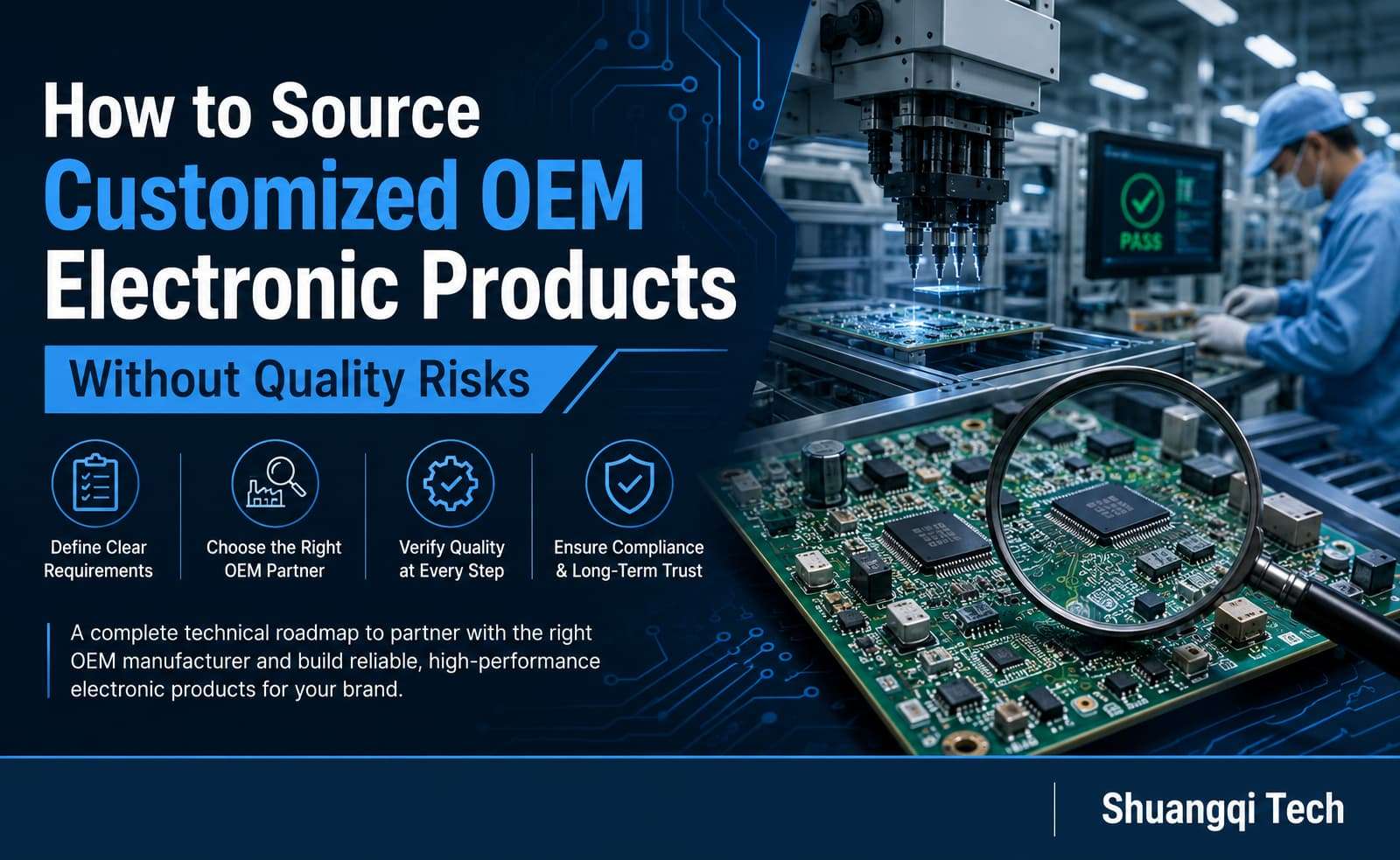
Sourcing electronic goods requires a very solid hardware plan to avoid serious technical failures. Many global buyers face critical issues with bad circuit soldering, wrong microchip batches, or devices that overheat quickly under normal use. To get exactly what your brand needs, you must work with a reliable OEM electronic products manufacturer that operates clean assembly lines and understands electronic engineering. This technical guide shows you how to choose the right factory partner, test internal circuit parts, and set up a safe production line without facing structural hardware risks. By following a step-by-step verification method, you can keep your manufacturing costs low and your device performance high.
When you buy electronics built to your own custom printed circuit board layout, you control the features, the outer plastic housing, and the internal components. However, you also take on the heavy responsibility of tracking every single stage of the engineering process. From checking the voltage ratings of capacitors to setting up final functional software testing rules, you must establish strong rules before any automated assembly begins. Working with a factory that owns advanced surface mount technology machines and employs skilled hardware engineers makes this whole technical setup much safer for your business.
The real secret to success lies in deep factory checking and clear technical contracts that focus on component datasheets. You cannot simply trust a low price tag on a basic website. Instead, you need to learn how factories build multi-layer circuit boards, how they test microchips for stability, and how they fix firmware bugs. This complete guide breaks down the whole electronic sourcing journey into simple, actionable steps so you can protect your financial investment and launch your electronic device successfully.
OEM electronics manufacturing means a specialized factory builds a physical device based entirely on your technical schematics, circuit blueprints, and custom enclosure designs. You own the brand intellectual property, the custom mold tooling, and the final selling rights. Meanwhile, the factory provides the automated assembly equipment, surface mount technology lines, and manual assembly labor. The factory does not own or sell your electronic layout to other buyers. They act purely as your technical production branch, turning your digital circuit files into real physical hardware.
Standard electronic products are pre-built, ready-made devices designed by the factory itself. Anyone can buy these ready-made devices, print a simple logo on the outer plastic, and sell them immediately. You cannot change the internal circuit design, swap the microchip, or alter the battery capacity of standard devices. OEM electronics are completely different because you modify the internal circuit layout, add specific wireless connection ports, or upgrade the core processing chip. Standard devices are fast to source but offer zero unique market features, while OEM manufacturing gives you absolute control over both hardware stability and custom software behavior.
Customization helps your electronic hardware stand out in a highly competitive consumer market. If you sell the exact same device as five other brands, you can only compete on price, which destroys your business profit margins. By altering the printed circuit board layout, adding specialized input ports, or installing a high-capacity lithium polymer battery, you create a unique item that solves real consumer issues. This custom engineering approach also lets you select industrial-grade internal parts, making your electronic device last significantly longer than cheap standard models.
Before you contact any factory manager, you must write down every technical parameter of your device inside a master document. This technical file must include the exact operating voltage ranges, maximum battery milliampere hours, screen panel resolution, and microchip clock speed. You should also add the exact dimensions of the internal board and the required wireless communication standards, like Bluetooth Low Energy or dual-band Wi-Fi. If you leave these technical fields blank, the factory will choose the cheapest components available, which makes your finished device slow, unstable, or prone to short circuits.
You need to specify exactly what materials the factory must use for the outer shell and the internal circuitry. For example, state whether the outer casing must use flame-retardant plastic or aviation-grade aluminum. For the internal circuit board, you must name the exact brands for critical silicon parts, like using a genuine microchip instead of an unbranded alternative. Providing a detailed bill of materials prevents the factory from swapping high-grade capacitors for low-quality parts during mass assembly.
Electronic devices must pass strict safety and emissions laws before you can legally import them into different countries. You must inform your supplier about the exact certifications your target market requires, such as CE for the European market or FCC for the United States. The factory needs to build the internal circuits according to these specific safety laws, using low-lead solder and insulated wiring. If they use non-compliant components, customs officials might seize your entire container, or your business could face heavy legal fines for selling unsafe electronics.
Safe packaging protects sensitive electronic components from static electricity, moisture, and rough handling during sea transport. Your technical requirements document must detail the use of anti-static shielding bags, thick foam padding, and master cartons that resist crushing. You also need to state the precise placement of voltage warning labels, battery disposal marks, and country-of-origin prints so that warehouse staff can handle and stock your electronic shipments without any errors.
|
Technical Category |
Component Details |
Main Technical Purpose |
|
Power Specs |
Voltage ranges, battery capacity, charging speed |
Prevents circuit burnout and overheating |
|
Silicon Parts |
Microchip brand, flash memory size, sensor type |
Guarantees stable software performance |
|
Circuit Safety |
Flame-retardant plastic, insulated copper wiring |
Passes strict international safety tests |
|
Shielding |
Anti-static bags, thick shockproof foam padding |
Protects delicate parts from static shock |
Global B2B websites are excellent places to start your search for a qualified electronics manufacturing partner. You can look through thousands of factory profiles, view high-definition pictures of their automated assembly rooms, and check their official business registration details. Look specifically for suppliers that hold advanced hardware certifications, show high trade transaction histories, and display real videos of their testing machinery. Use these digital platforms to create a short shortlist of ten factories that specialize in your exact product category, like consumer audio or smart home sensors.
Attending professional electronics trade shows lets you meet factory head engineers face-to-face and examine their circuit build quality in person. You can handle their live sample devices, check the alignment of the outer plastic seams, and see how smoothly their screens respond. If you cannot travel, industrial manufacturing directories provide vetted lists of electronics plants, including their legal setup dates, machinery assets, and primary export markets, helping you separate genuine manufacturers from small trading companies.
Once you select your top factory candidates, you must verify their technical and legal credentials thoroughly. Request their business registration files, environmental compliance papers, and ISO 9001 quality management certificates. Check that the name on their factory business license matches their official corporate bank account to avoid intermediary agents. A real electronics factory will happily share their registration numbers and show documented proof of past export shipments, giving you clear peace of mind before you send any deposit money.
You must ensure the factory can handle your production volume without sacrificing circuit quality. Ask how many automated surface mount technology lines they operate, how many manual assembly workers they employ, and their maximum monthly output for similar circuit designs. If a factory is too small, your order might get delayed for months because they lack the machinery to place components quickly. A well-equipped factory has enough cleanroom space to scale up production if your device sales increase suddenly.
Since you are building a custom electronic device, the factory must possess a strong team of on-site hardware and firmware engineers. Ask how many technical designers work in their research department and what software they use for circuit schematic layouts. A highly skilled engineering team can analyze your Gerber design files, catch potential short-circuit flaws before production begins, and suggest small trace adjustments that make the circuit board easier and cheaper to assemble without losing signal quality.
Reviewing the factory's past electronic work tells you exactly what level of precision they can achieve. Ask to see physical or photographic examples of similar circuit boards they have assembled for other global technology brands. Examine the neatness of the solder joints, the alignment of the small resistors, and the overall finish of the plastic enclosures. If their past product portfolio shows clean, precise circuit assembly, they are highly likely to maintain that same level of care when building your custom hardware.
Never pay for a full mass production run until you thoroughly test a fully working golden sample. The factory must send you a physical prototype built with the exact microchips and plastics you requested in your bill of materials. Put this working sample through tough daily electrical tests. Run it continuously for days to see if the voltage regulators overheat, drop it onto hard surfaces to test casing strength, and check every single software feature for bugs. If a component fails, tell the factory to modify the circuit path before they start making thousands of units.
Hiring an independent technical inspection agency is the best way to monitor circuit quality without traveling directly to the factory floor. These specialized inspectors visit the manufacturing plant on your behalf at critical times during the assembly process. They check the calibration of the assembly machines, test random circuit boards against your specifications sheet using multimeters, and send you an independent report filled with macro photos of the solder joints. This step stops the factory from using cheaper sub-components when you are not looking.
Quality control must happen while the workers are actively assembling the electronics, not just at the very end of the line. In-process quality checks mean technical inspectors test the circuit boards at various stations along the line. For example, they test the bare circuit board power levels before installing the battery, and they verify the screen touch response before closing the outer plastic shell. Catching a soldering error early prevents a minor wiring mistake from ruining a whole batch of finished electronic devices.
Once mass production finishes completely, inspectors perform a final quality check on the fully packed retail boxes. They use standard statistical sampling methods to pick random boxes from the warehouse pallets and run complete functional tests on those final devices. They check battery charging times, test the wireless signal range, look for scratches on the plastic, and verify the weight of the boxes. The factory must not load the shipping container until the final quality report proves that the batch meets every pre-agreed electronic standard.
[SMT Board Component Placement] ➔ [In-Process Functional Voltage Testing] ➔ [Final Boxed Hardware Inspection] ➔ [Secure Anti-Static Container Loading]
A technical agreement is a binding legal document that sets the exact quality metrics for your electronic production run. It states exactly what counts as a minor cosmetic defect, a major functional defect, or a critical safety failure. For example, a tiny mark on the plastic housing might be a minor defect, but an unresponsive power chip is a critical safety failure. The contract must clearly state that if the circuit defect rate goes above a specific percentage, the factory must rework the entire electronic batch at their own expense.
The product specification sheet is the master reference guide printed out for the assembly line workers. It contains detailed circuit schematics, wiring connection paths, specific part numbers, and exact glue types for insulation. This document must be translated accurately into the local language of the factory workers. Keeping this technical sheet updated ensures that everyone from the chief hardware engineer to the line worker knows exactly how to route wires and mount components without confusion.
Once you are totally satisfied with a pre-production sample's performance, sign your name on the outer casing and send it back to the factory. This specific device becomes the official golden sample. The factory will store it securely on the assembly floor. Workers and quality control supervisors will constantly compare the daily mass-produced circuit boards against this golden sample to make sure the soldering color, component brands, and assembly tightness remain completely identical.
Building a physical prototype turns your digital computer circuit design into a real object you can measure and test. This engineering step is vital because custom electronics manufacturing often looks perfect on a software screen but reveals electrical or physical layout flaws in real life. A real prototype lets you check if the internal wires are pinched, if the copper traces can handle the power current, or if the heat sinks cool the main processor properly. It acts as the technical foundation for a safe production run.
Rarely does the very first circuit prototype turn out absolutely perfect. You will likely need to go through two or three physical versions to fix minor firmware bugs, adjust component placement on the board, or reinforce weak plastic screw posts. This technical adjustment cycle is a completely normal part of electronic development work. Work closely with the factory hardware engineers during each phase, document every single modification made to the schematics, and do not start mass assembly lines until every bug is removed.
Your final sample approval standard must consist of a clear list of pass-or-fail electronic performance metrics. This list includes specific testing criteria, like withstanding an automated voltage surge test, operating continuously inside a high-temperature chamber without data corruption, and charging the battery safely within a specific number of minutes. Once the sample passes every single test on your engineering checklist, you can issue a formal written approval to start mass production safely.
Delays in electronic component sourcing can hurt your retail product launch and ruin your business sales season. To keep the assembly line moving, require the factory management to give you a weekly production schedule broken down by specific technical milestones. This schedule must show when the raw microchips arrive, when automated surface mounting begins, when manual casing assembly starts, and when final packaging takes place. Tracking these milestones weekly helps you spot component delays early, allowing you to adjust your business plans.
To protect your electronic brand from sudden product failures, you must know exactly where the factory buys its raw materials. Demand complete transparency regarding their sub-suppliers for critical parts like lithium cells, power adapters, and primary chipsets. A transparent supply chain means the factory uses steady, verified component vendors. If a factory manager refuses to share where they buy their silicon wafers or capacitors, they might be shopping around for cheap, unverified surplus parts behind your back.
Mass electronics production can face unexpected industrial problems like factory power cuts, component market shortages, or labor scarcity. To manage these operational risks, you need a backup plan written directly into your contract electronics manufacturing services agreement. The factory should hold a small safety stock of critical microchips in their climate-controlled warehouse so that a sudden global supply shortage does not freeze your assembly line, keeping your project moving forward smoothly.
Every contract electronics manufacturing services agreement must include a clear, binding hardware warranty section. This clause defines how long the factory guarantees the internal circuitry against manufacturing defects, which typically lasts twelve to twenty-four months from the shipping date. The warranty must explicitly state that the factory is fully responsible for any internal component failures that happen under normal voltage usage, protecting your business from paying for factory assembly mistakes.
When a retail customer returns a broken electronic device, you need a fast technical system to analyze and fix the issue. Your supplier agreement should detail the defect handling process step-by-step. For instance, you can send diagnostic software logs or macro photos of the blown circuit board to the factory's engineering team. If the hardware failure stems from a factory soldering mistake, the manufacturer must either ship replacement parts for free or give you credit on your next order.
Building a respectful, long-term relationship with your factory team leads to better component prices, faster engineering support, and priority treatment during busy shipping seasons. Pay your manufacturing invoices on time, communicate clearly using engineering data when mistakes happen, and visit the electronics assembly floor in person when possible. When a factory views your brand as a stable partner rather than a one-time buyer, they will work much harder to keep your circuit quality high.
Sourcing customized electronics requires careful attention to component datasheets and assembly steps. You cannot cut corners when defining technical specifications, verifying factory backgrounds, or setting up multi-stage quality control checks on the assembly line. By documenting every single circuit requirement, hiring independent technical inspectors, and using a certified golden sample, you significantly lower the structural risks of manufacturing hardware overseas. A successful electronic product launch depends entirely on clear communication, strong technical contracts, and persistent monitoring of the automated assembly lines. Taking the time to build a structured sourcing plan ensures that your finished devices arrive at your warehouse on time, completely safe, and built exactly to your original electronic design standards.
Finding an engineering team that balances technical skill with strict circuit testing makes your entire product development process smooth and stress-free. When you handle bulk electronic products sourcing, you need an experienced partner that values clear communication, honest material tracking, and deep electrical testing methods above all else. Working with a dedicated manufacturing specialist ensures your unique circuit designs are protected, your boards are assembled safely, and your final goods arrive without any hidden technical defects.
For reliable development support, contract electronics manufacturing services from Shuangqi Tech provide the advanced surface mount technology lines, certified hardware engineers, and transparent quality control systems needed to bring your custom electronics to life safely. Their manufacturing team works closely with your business to verify raw microchips, track daily assembly stages, and enforce strict high-temperature and power surge testing before shipping. Partnering with a proven production specialist allows you to focus on growing your brand while your custom devices are built to the highest global safety standards.
A remote contro
READ FULLBuyers sourcing remote control light bulbs
READ FULLA touch control desk lamp replac
READ FULL